ACL Reconstruction
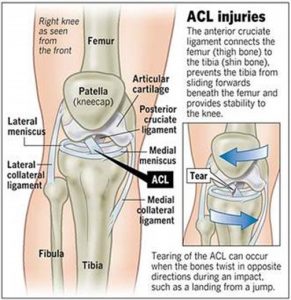
ACL reconstruction
The anterior cruciate ligament (ACL) is a crucial ligament for knee stability and it joins the two large bones of the thigh and leg and stabilises them. It primarily prevents abnormal front & back movement of the tibia (leg bone) in relation to the femur (thigh bone).
How does ACL get torn?
ACL tear always happen because of injury to your knee joint. These injuries may occur during sports, road traffic accidents or activities of daily living (slipping on a wet floor, jumping from a low height or even dancing) that result in a sudden change of direction (pivoting), jumping or landing awkwardly. In rare situations, minor twisting while walking on uneven surfaces may lead to ACL tears when there is an associated cyst in the ligament.
What happens when the ACL is torn?
A torn ACL may lead to an unstable knee that causes “buckling” on a sudden change of direction. The patient will have difficulty in running, brisk walking, climbing up and down the stairs and feeling instability in the joint.
With buckling and instability, there are chances of damage to the meniscus (shock-absorbing cushions between these bones) and the articular cartilage (protective lining of the joint) causing early arthritis.
What is the initial management of ACL tears?
In most ACL injuries there is immediate knee swelling, pain, limp and restricted movement. The management of this early phase is relative rest, ice application & protection of the knee by a rigid or flexible brace followed by graded physiotherapy (prehab). During this phase one need to be careful on slopes, uneven surfaces and must avoid twisting movements (pivoting) and jumping. This will protect the knee from buckling that will further damage the knee.
Early surgery is performed ONLY if the knee is “locked” or unstable even during activities of daily living.
Once the swelling and pain subsides then the clinical examination and the MRI will confirm your diagnosis and further plan of treatment can be decided.
When is ACL surgery performed?
ACL surgery is performed once the knee is pain free, not swollen, the muscles around the knee stronger through targeted exercises (prehab) and knee bending is satisfactory.
In some cases this may be sufficient to manage the instability and no surgery is needed. However, if there is persistent instability, surgery (ACL reconstruction) is recommended.
How is the ACL reconstructed?
ACL reconstruction is done arthroscopically (key hole surgery). Grafts from the patient (autograft) or rarely allografts(from cadavers) are used.
Graft is fixed with Bio degradable screw and button.
When can I join back my duties?
Patient is allowed for immediate weight bearing walking after the surgery. Graduated knee bending and strengthening exercises (Elite knee Protocol) is to be followed for next 3-4 months till the graft bone healing.
Patient is allowed to play only after 6 months.